
Fire doors are one of the most important safety features in any residential block. They protect lives, slow the spread of fire and smoke, and give people time to escape. Despite this level of importance, many people with responsibilities for block management safety struggle to keep on top of fire door requirements. Some managers are unsure of their duties, while others are unsure which rules apply, especially when dealing with older buildings not designed to modern standards.
This guide breaks down what block managers need to know. It covers what to check, how often to inspect doors, and the common issues that cause blocks to fall out of compliance. Falling out of compliance can lead to costly fines and prosecution, not to mention the cost of repairs and upgrades.
Understanding What A Fire Door Should Do
A fire door has one job. It should hold back fire and smoke for a set amount of time. The time will vary depending on its position, role, and function. For the door to work properly, every part needs to be correct, including its frame, hinges, seals, glazing, and closing mechanism. If just one of these parts fails, the door can fail too.
Block managers do not need to become fire door experts. However, knowing the basics can help you spot problems early and avoid unnecessary risks.
Knowing Which Doors Count As Fire Doors
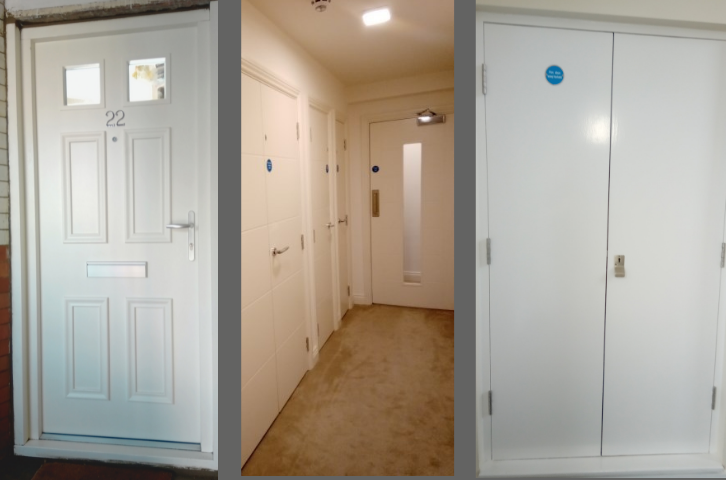
Not every door in a block is a fire door, but many are. Stairwell doors, lobby doors, flat entrance doors, and plant room doors usually have a fire rating because they protect escape routes. Flat entrance doors are a common point of confusion. They form part of the fire protection for the entire block, not just the individual flat. As such, they are typically fire doors.
The exact requirements depend on your building’s height and layout. If you are responsible for your block, you will need a professional fire risk assessment that will indicate where fire doors are required. If any door needs replacing, the new door must meet the correct fire rating. Even if you choose the right door, you still need to ensure it is installed correctly. Poor replacements are one of the most common compliance issues we see in older blocks.
Regular Checks And Why They Matter
Fire doors should be checked regularly. A simple monthly check is often enough to catch problems early. You do not need specialist training to do this. You only need to look for obvious signs that a door might not be working as it should.
Things to look out for include:

Gaps around the door that are too large

Damaged or missing seals

Hinges that are loose or noisy

Closers that do not fully shut the door

Residents propping doors open
Small issues can make a big difference in a fire. A door that does not close fully will not hold back smoke with devastating consequences.
Why Older Blocks Need Extra Attention
Many older buildings were built long before modern fire standards. Some blocks still have their original doors, which may not be compliant today. Replacing every door can be costly, so block managers often need practical solutions that make sense for the building and the budget.
Older intercom systems, uneven frames, and out-of-date closing systems can cause flat entrance doors to fail tests. In some cases, repairs can extend the life of these doors, but only if the underlying structure is sound.
Specialist help is useful here. An expert can tell you if a door needs replacing or can be safely repaired.
Working With Residents
Residents often do not realise how important their flat entrance door can be when it comes to fire safety. They may change locks without telling you, remove closers, or prop doors open for convenience. A quick leaflet, email update, or notice in the lobby where everyone can see it can help reduce problems. When residents understand the purpose of fire doors and the role they can play in keeping everyone safe, they are more likely to act. Letting agents and landlords also need to be aware of their responsibilities. If the flat is rented, the landlord must maintain the fire door to the correct standard.
When To Bring In A Professional
There are limits to what a block manager can safely check. A professional inspection checks the rating, the installation, and the performance of every fire door formally against the appropriate standard. This gives you clear guidance on what needs to be repaired or replaced. It also provides useful documentation if the block ever needs to show proof of compliance for insurance purposes or, sadly, if the worse were to happen.
It may be that you only need a few adjustments. If you have a mixture of older doors, poorly installed replacements or damaged frames in your block, the work might be more extensive. However, the key lesson is that without a professional assessment, it’s a risk to guess with potentially deadly consequences if you get it wrong.
Helping Block Managers Stay Compliant
Fire door responsibilities can feel complicated and onerous, especially in older buildings or large sites with many residents. The aim is to keep things simple, reduce risk and make sure escape routes remain protected. Regular checks, clear communication and the right professional support can make the task much easier.
Call 01708 616 411 for a free fire door consultation. Whether you’re a landlord or property manager, we provide tailored advice and installation services to keep your property and everyone inside it safe.
Frequently Asked Questions
Who is legally responsible for fire doors in a residential block?
In most cases, the responsibility sits with the named Responsible Person under fire safety legislation. Usually, this is the freeholder, managing agent, or block management company. If you’re not sure, check the relevant paperwork immediately.
How often do fire doors need to be checked?
Communal fire doors should be visually checked at least monthly to identify obvious faults, such as damage, missing seals, or doors that do not close properly. Flat entrance doors should be checked at least every six months. These checks are in addition to formal fire safety inspections carried out by a competent professional.
What are the most common reasons fire doors fail inspections?
Some of the most common issues include doors that do not close fully or smoothly, missing or damaged intumescent and smoke seals, gaps that exceed permitted limits, and non-standard locks or closers. Many of these issues are easy to miss without regular checks.
Do older buildings have to meet modern fire door standards?
Older buildings are not automatically required to meet modern standards in full, but fire doors must still perform their intended fire safety function. A fire risk assessment will determine what is acceptable for your building. In some cases, repairs or upgrades may be sufficient; in others, full replacement may be necessary.
Can residents make changes to their flat entrance fire doors?
No. Residents should not change locks, remove door closers, or modify their flat entrance door without permission. These doors are part of the building’s overall fire strategy. Unauthorised alterations can make the door non-compliant and place lives at risk.
What certification do I need for the fire doors in my block?
Fire doors should be third-party certified to demonstrate that they meet the required fire resistance standards. This usually means the door set has been tested to BS 476 or BS EN 1634-1 and is supplied with evidence such as a manufacturer’s certificate, test report, or certification label. Installation is just as important as the door itself, so certification should cover both.